
AIRLINE SOLUTIONS
One integrated cockpit for operations, technical control, finance and commercial performance.
The iSky Airline IOCC connects flight operations, aircraft technical availability, commercial activity and per-flight profitability so management can understand both operational execution and financial outcomes in real time.
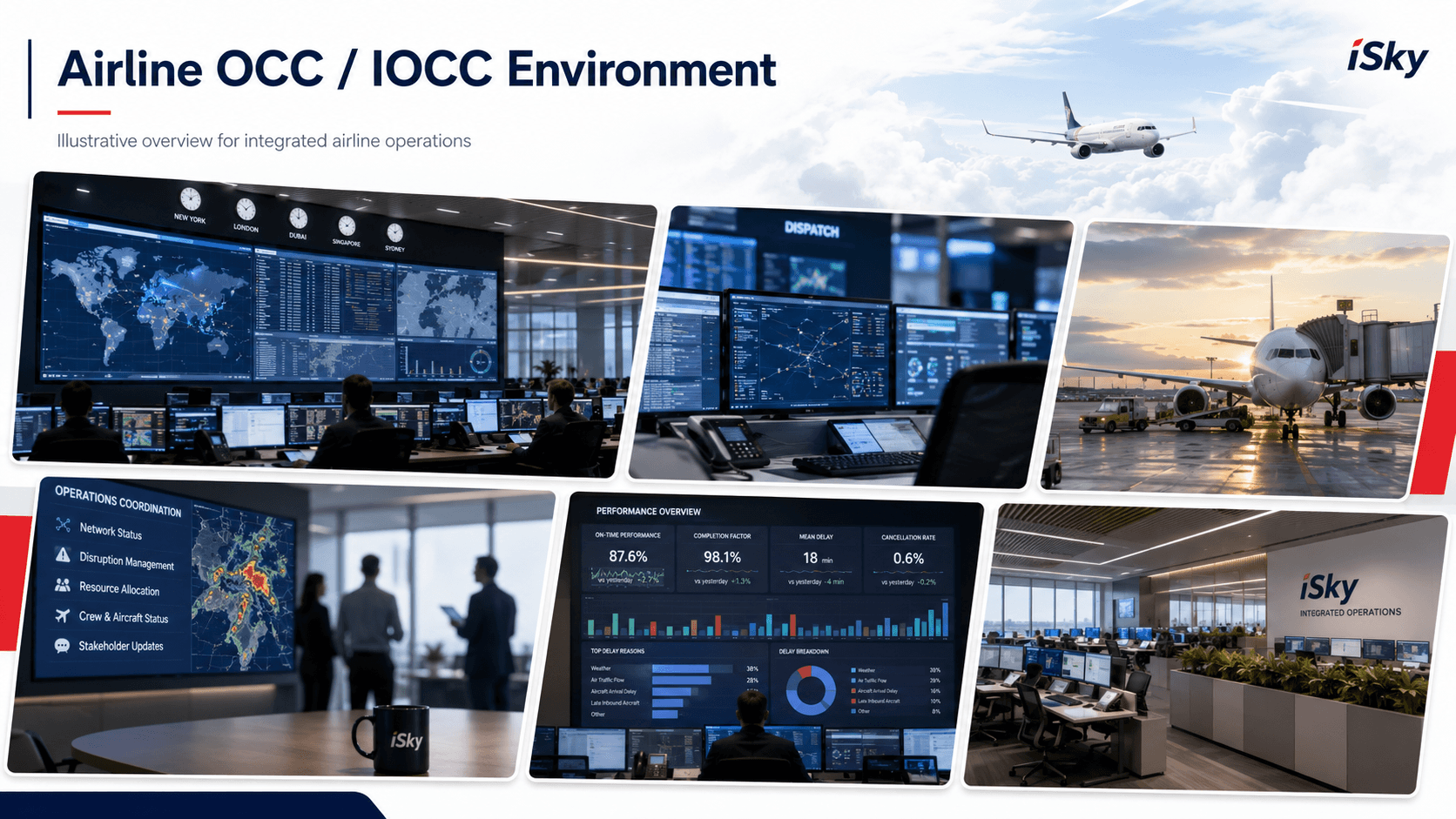
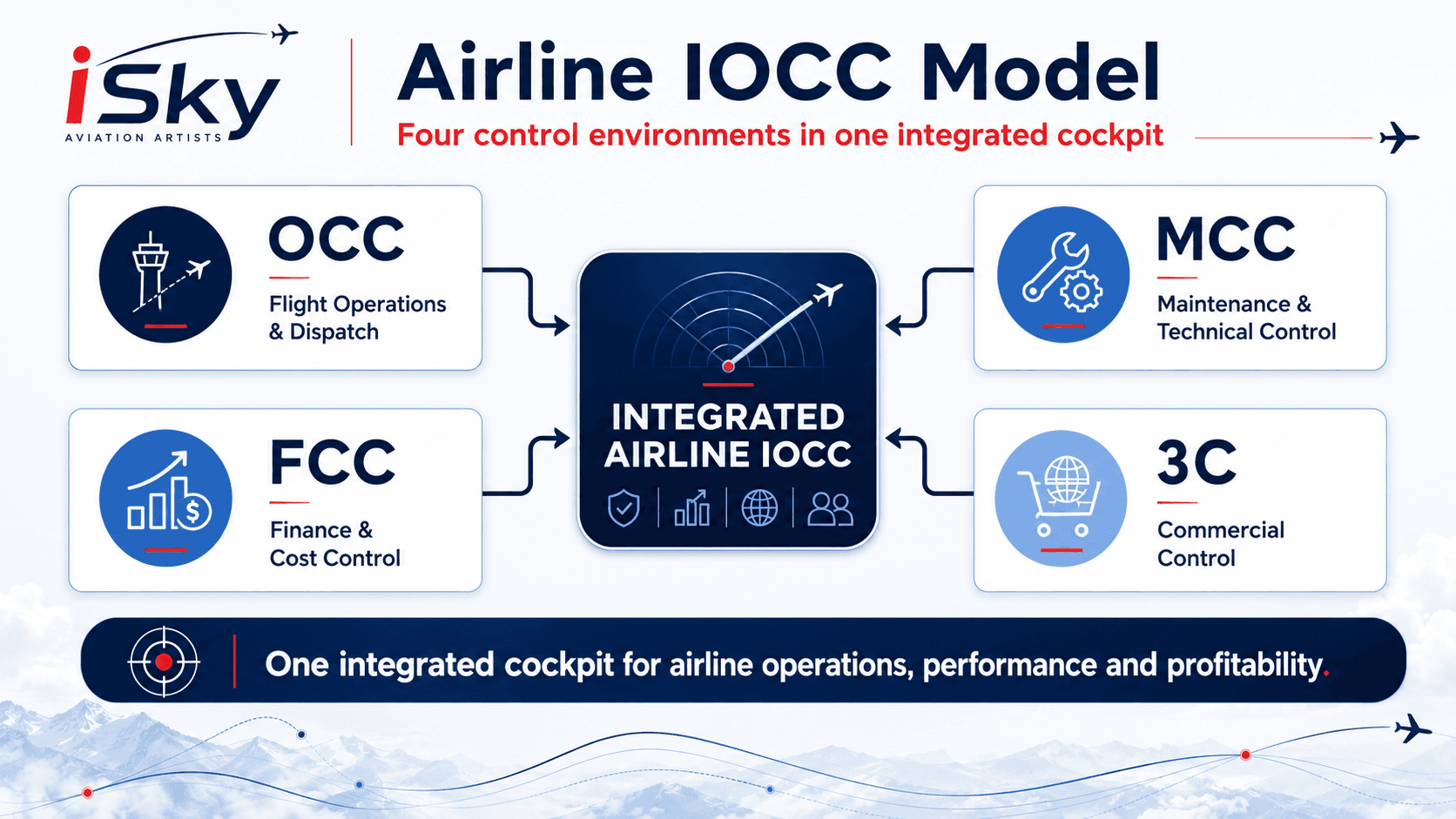
THE 4-PILLAR AIRLINE IOCC
OCC + MCC + FCC + 3C in One Cockpit
The value is not the presence of four separate departments. It is their live integration: operational execution is directly connected to technical status, commercial demand, and unit profitability.
Operations Control Center
Coordinates real-time flight preparation, dispatch releases, flight watch tracking, crew duty limits, slot compliance, and irregular operations recovery.
KEY SYSTEM CAPABILITIES
- Operational Flight Plan (OFP) & Dispatch Tracking
- Live Flight Watch & Movement Tracking
- Crew Rostering & Flight Time Limitations (FTL)
- Slot Coordination & Air Traffic Flow Management
- Disruption Management & Fleet Swapping
INTEGRATED AIRLINE ARCHITECTURE
How the Four Control Centers Synchronize in Real Time
When a flight is delayed or rerouted, OCC executes the operational recovery, MCC adjusts maintenance checks, 3C manages passenger connections, and FCC updates the voyage profitability report automatically.
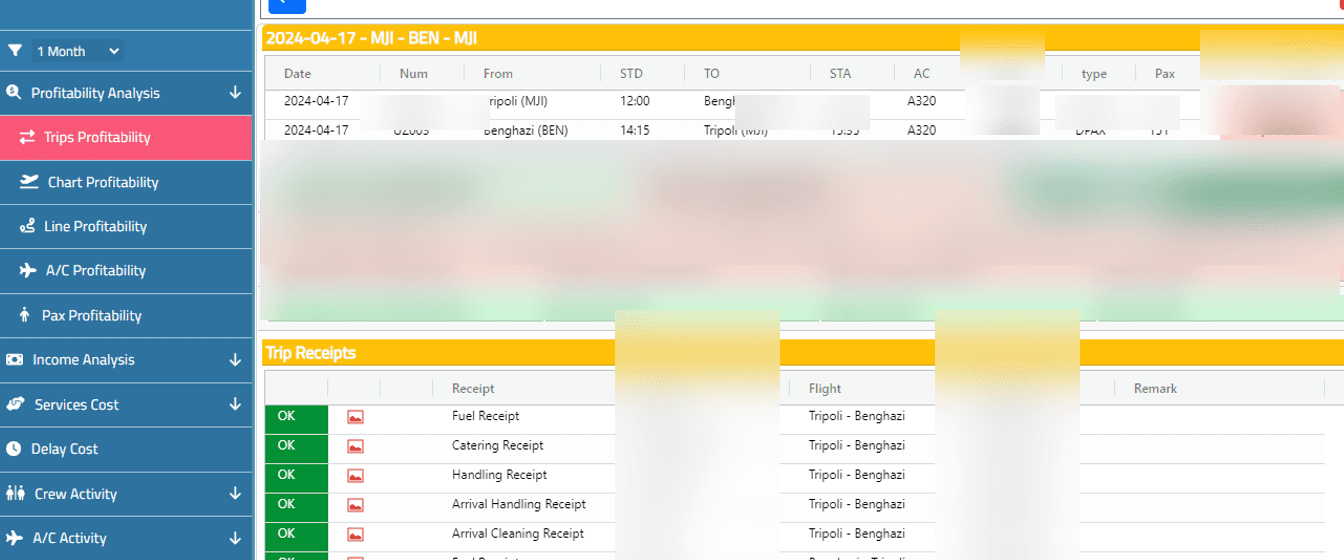
UNIT ECONOMICS IN REAL TIME
A flight is one operation. Its data is often spread across multiple departments.
A single flight involves dispatch release, crew duty hours, aircraft technical deferrals, fuel burn, handling charges, catering, navigation fees, and ticket revenue.
When these functions live in isolated systems, airline executives only discover whether a route was profitable weeks after the month closes.
- Instant Direct Operating Cost (DOC) calculation upon block-on
- Actual fuel burn variance tracked against flight plan calculations
- Navigation and airport overflight fee reconciliations without manual audits
- Real-time route margin trends for network planning and charter pricing
The IOCC Advantage: Connects flight operations execution directly to unit profitability and commercial yield.
TECHNICAL AVAILABILITY & OTP
Protecting schedule integrity through synchronized technical control.
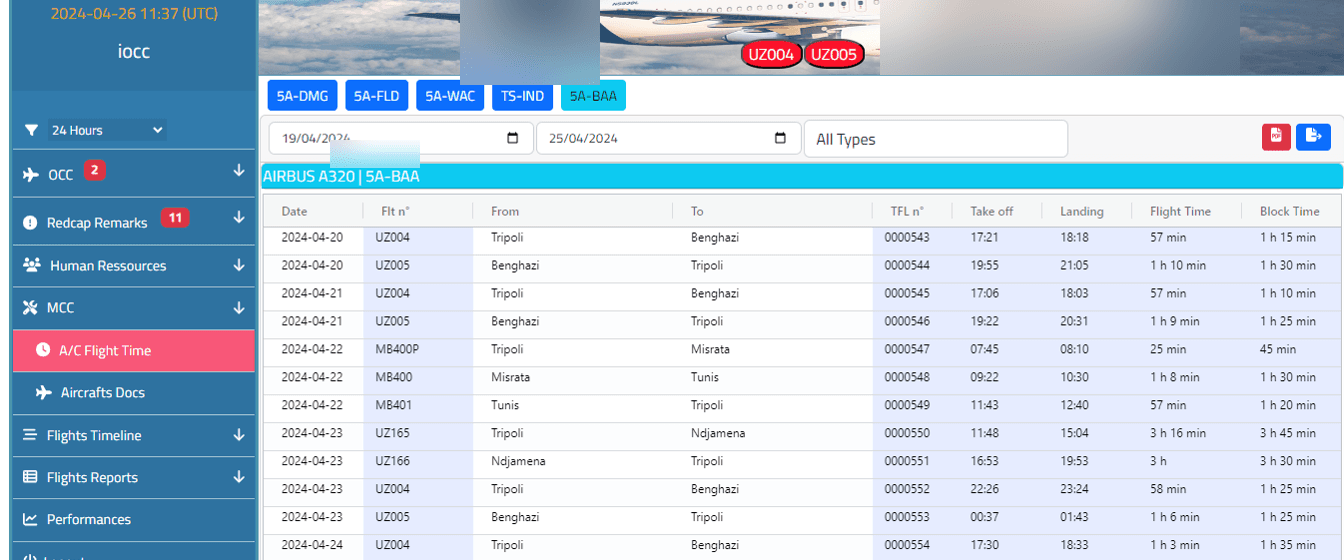
When a technical defect or MEL deferral occurs, the MCC evaluates technical airworthiness, the OCC assesses aircraft tail swaps, and commercial control manages passenger connections simultaneously.
- Live MEL and CDL expiry tracking with automated dispatch interlocks
- Outstation maintenance technician coordination and spare parts logistics
- Station-by-station on-time performance (OTP) delay attribution
- Eliminates reactionary network delays through proactive disruption recovery
AIRLINE ENGAGEMENT
Discuss Airline IOCC Deployment & Configuration
Learn how the IOCC can be configured around your fleet size, route network, maintenance arrangements, and commercial model.
Discuss Your Priorities